Brian and I became landlords a little while after purchasing a condo. For us, it was a good decision because renting the condo (1) Makes us money and (2) Allows us to live in an area of the city we like better. It’s not easy to decide to become a landlord, and it is even more work after you make the decision. Here’s how we found our first tenant.
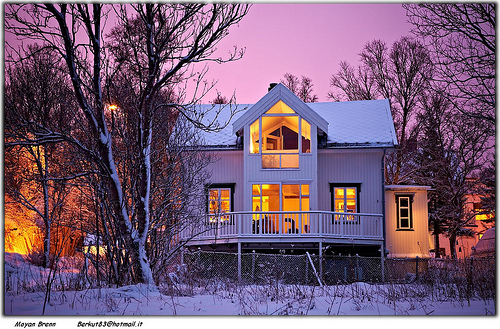
Original by Moyen Brenn at http://www.flickr.com/photos/aigle_dore/6826909042/
Decide how much you want to ask for rent
People rent out their properties to make money. Of course you want to make money! But being greedy will scare away tenants. You need to be realistic.
Consider how much money you need per month to cover your mortgage, your taxes, and any bills or fees, such as from strata (should you ever need any help with anything strata, you could get in touch with an expert advisor like Michael Teys for some guidance). Then, consider how much similar units cost in the same area. If you’re renting a unit out in ‘burbs, there’s no point comparing it to the nearest big city, whether it be Toronto or Vancouver or San Francisco – it simply doesn’t have the same draw. If you’re renting a unit in the East end, there’s no point comparing it to the West end. It is not the same.
Our condo is located in East Vancouver. East Van is a real mix of people, depending on what neighbourhood you’re in. It can be rough, it can be hippie, it can be completely similar to a neighbourhood on the west end. The neighbourhood that our condo is in has a mix of Kitsilano refugees, hippies, drunks, immigrants and students. By looking on Craigslist, I found that most one bedroom apartments in the area seemed to go for $700-900.
Our condo had some perks – a separate entrance, large patio, and completely renovated interior, including new appliances and bathroom. It could easily rent for $1100 a month in the West End … but this was not the West End.
We decided to price our one bedroom at $1000 per month, no utilities or cable included. $1000 per month is pretty average for the westside, cheap even. But it’s expensive for an East Van apartment. By pricing it slightly higher than average, we also made it more likely that anyone who wanted to rent our apartment would be employed.
Decide on your target tenant
Do you want to rent to students? Young professionals? Crackheads? It might not be the first thing that pops into mind, but where you place your ad will influence who responds to your ads.
Some people might only be comfortable renting to certain ethnic or social groups. It’s NOT LEGAL – I will emphasize this – to discriminate on ethnicity, religion, age, etc. But often people are most comfortable with people similar to themselves. This is especially true if you are living in the same house as your renters, such as a basement rental in a house or a shared accomodation.
In this case, I would suggest avoiding Craigslist and instead, putting ads up in places that target your target group. If you’re a student and you want student roommates, then advertise on campus. If you are religious and prefer to be housed with similarly minded people, advertise at your place of worship or in your community’s newspapers.
Again, it is NOT LEGAL to state in your ad that you are only looking for students, or you are only looking for X ethnicity or religious background. But you can stack the odds in your favour.
If even after targeted advertising, you have a prospective tenant come by and find out they are not to your liking, for whatever reason – don’t tell them that they can’t apply. It’s illegal. Remember – you never have to tell a tenant why their application to rent was declined. Let them apply and if they are not to your preference, for whatever reason, simply call them up a few days later and say, “Sorry, your application was declined.”
For Brian and I, we simply wanted nice tenants who were clean, tidy and employed. So we put an ad up on Craigslist and hoped for the best!
Write a good apartment rental ad
When I am looking for a place to live, I only consider ads with pictures, solid descriptions and prices. If I have to waste time now chasing down information from a potential landlord, how much time will I have to waste later if I become a tenant? Provide a detailed, upbeat, but honest description of the property – it will save you time and save your potential tenants time.
A good ad should include, at the very least:
- number of bedrooms and bathrooms and appliances
- approximate size
- pet policy
- in an apartment, which floor the suite is located on and what direction the suite faces
- PRICE
- and PICTURES
I can’t tell you how many ads I’ve seen which state something to the effect of: “1 bedroom, no pets, please call” and does not provide a price or pictures. As a tenant, I will not bother with a vague ad like this.
When I wrote the ad for our condo, I wrote about three paragraphs. The first described the condo – how many rooms, the size, and the appliances. The second described the neighbourhood – what transit and shopping options were available, and approximately where the condo was located. The third is what I call the “full disclosure” paragraph – I emphasized that there was no dishwasher, that pets were allowed, and that I would require a credit check, a lease and post-dated rent cheques.
Finally, I always put at the very end of my ad: “Please tell me a bit about yourself in your email.”
Be ruthless when screening tenants
I had many emails from interested tenants. However, most of them did not follow the instructions in my ad! I had many emails which consisted of, “Hi, I’m interested. Call me: xxx-xxxx.” Um, no. In my ad, it always stated, “Tell me a bit about yourself.” I expect people will tell me a bit about themselves.
Forcing people to talk about themselves shows you several things:
- Are they genuinely interested in the property? A good, well written email shows me that this person was interested enough to take a few minutes and gather their thoughts before shooting off a message.
- Are they good communicators? I discarded all emails which had spelling mistakes, poor grammer or incomprehensible language. If they cannot communicate clearly now, they will be a pain in the ass to deal with later. Admittedly, English may not be some people’s first language – but do you want to rent to a tenant that you have difficulty communicating with?
- Are they already trying to haggle? If your ad says “Sorry, no dogs” and they email asking if they can bring their dog – dump the email. If they are already trying to get concessions out of you and they are not even tenants yet, they’re sure to be a pain in the ass later on.
After much vetting, I was left with about 4 prospective tenants.
Perform a credit and reference check
Credit checks tell you a bit about a prospective tenant’s financial background. It can give you an idea of their employment and rental history, depending on whether they had to do previous credit checks, which you can cross-check with the information in their rental application. As well, a good credit score is always encouraging and at least tells you if they are the sort of people who pay their bills on time.
Reference checks tell you a bit about a prospective tenant’s personality. Are they tidy and responsible? How did they get along with colleagues? It’s important to have an idea of what your prospective tenants are like around other people and to know how they have acted in the past.
Always ask for at least three references – one work, one previous landlord, and one other. Now, sneaky tenants can put anyone down as a reference of course. Best friend Sue can suddenly become Sue the manager who has a glowing reference to give you. Stay ahead of the game by being skeptical. If there is a discrepancy in terms of work history or rental history – say, the “landlord” tells you they were great tenants, but could not provide the dates of the tenancy – be suspicious. For work references, never call the direct number that the tenant gives you. Look up the number of the company or business yourself, call the front office and ask to be redirected to the correct person.
Apply the finishing touches
Be thorough and make sure your new tenants know that you are thorough so that they don’t get any funny ideas! 😉
A few final suggestions:
- Always do a move-in condition inspection – have your tenant walk through the property with you, take pictures, and have them sign a document agreeing to the condition of the unit prior to moving in.
- Get post-dated cheques – no one wants to harass someone for money every month and no one wants to be harassed.
- Use the official forms available from your local tenancy board – it’s easier than coming up with your own.
- Have everything signed and dated – one copy for you, one copy for them.
And exhale.
If you’re lucky, you’ll get awesome tenants like ours who have a cute cat, pay the rent on time, and keep a clean house.
